In a healthcare environment, interior architecture is not merely a collection of arranged furniture, but an integrated tool that directly supports treatment and operational workflows. Hospitals and medical facilities are inherently high-pressure environments, characterized by the strain of overworked medical staff, the anxiety of patients, and the distress of their loved ones. In a healthcare environment, interior architecture is not merely a collection of arranged furniture, but an integrated tool that directly supports treatment and operational workflows. Hospitals and medical facilities are inherently high-pressure environments, characterized by the strain of overworked medical staff, the anxiety of patients, and the distress of their loved ones.
With 30 years of pioneering leadership in the furniture industry, we understand that compliant healthcare interior design must deliver a highly adaptive space that perfectly aligns with two core states: medical operational efficiency and human psychology.
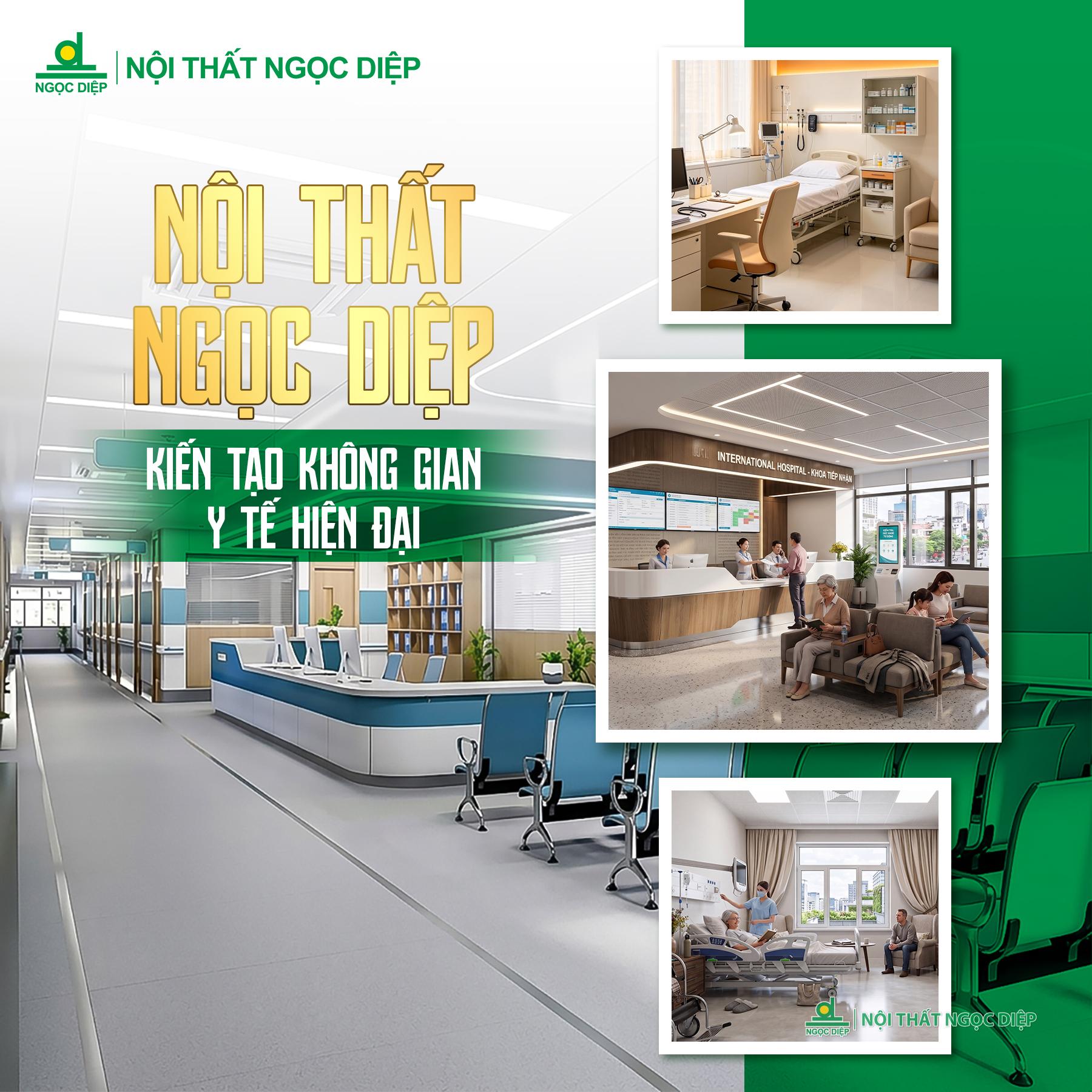
Operational characteristics and synchronization requirements in healthcare spaces
The inherent nature of a healthcare environment is continuous movement with an exceptionally high frequency of use. A smooth medical examination and treatment workflow demands second-by-second coordination between functional rooms, ranging from reception lobbies and examination rooms to inpatient wards and high-tech areas. Practice has proven that rigid, non-synchronized interior spaces often expose critical bottlenecks after a short period of operation: surfaces prone to contamination, unstable structures that challenge sanitization, or illogical layouts that impede the traffic flow of medical staff.
Furthermore, the rigidity of certain conventional industrial furniture products inadvertently prolongs the patient’s sense of insecurity. When a physically vulnerable body is confronted with a suffocating space, the perceived waiting time is significantly extended. Deeply understanding this psychological strain, Ngoc Diep Furniture does not approach the healthcare sector with off-the-shelf commercial products. Instead, we deliver a comprehensive “custom-tailored” solution, where interior architecture is materialized into a therapeutic remedy that soothes the mind and builds ultimate peace of mind.
Space optimization for distinct user groups
To materialize our human-centric philosophy, hospital space solutions by Ngoc Diep Furniture are synchronously optimized based on anthropometric efficiency and behavioral psychology. The design language we select strictly adheres to structural coherence, utilizing neutral color palettes combined with soft, gentle lighting systems. This transition eliminates the signature stress inherently tied to hospitals, replacing it with a soothing and welcoming ambiance. 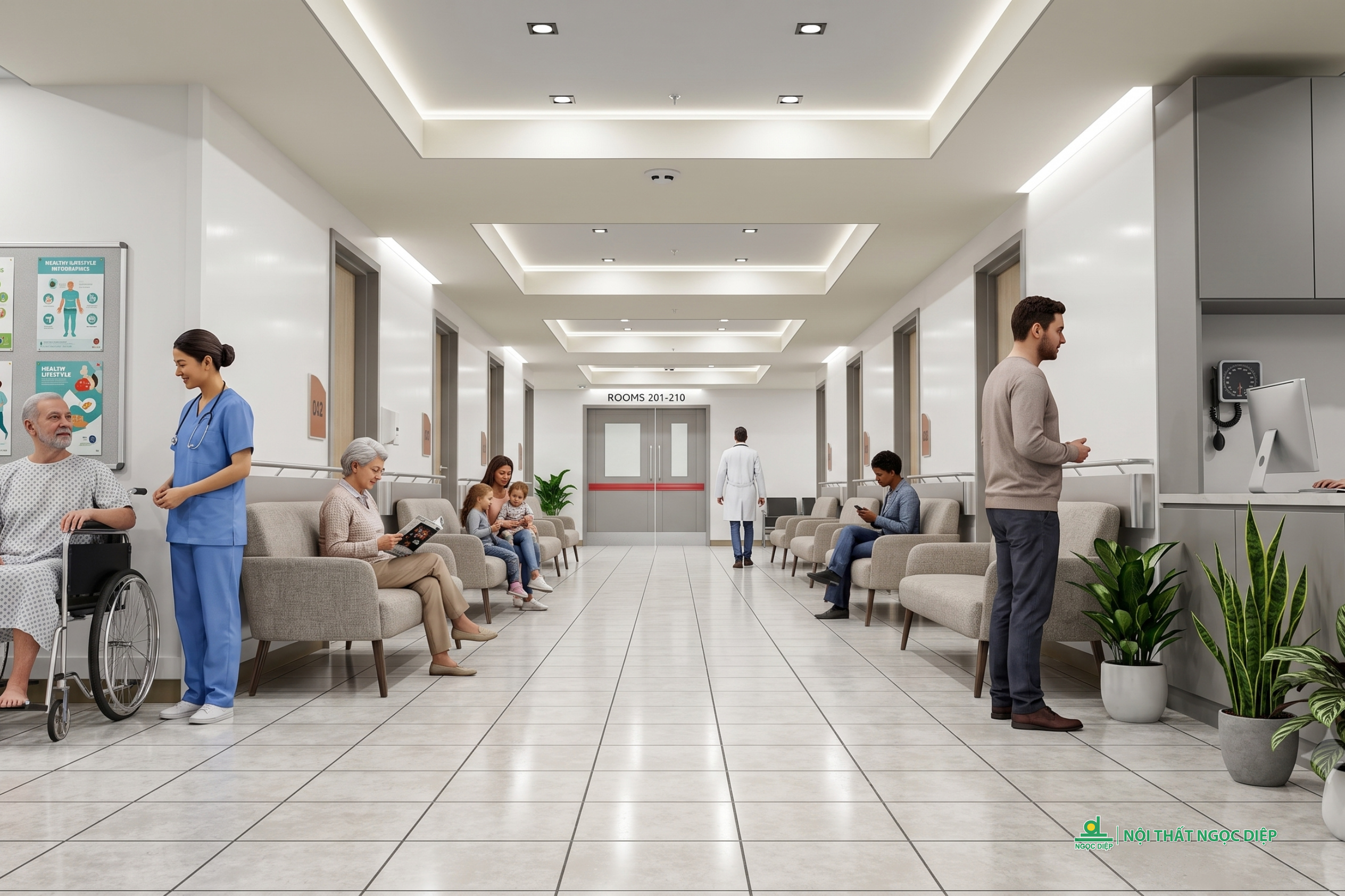
Ngoc Diep Furniture’s capabilities are vividly demonstrated through the deconstruction and resolution of optimization equations for each distinct functional zone:
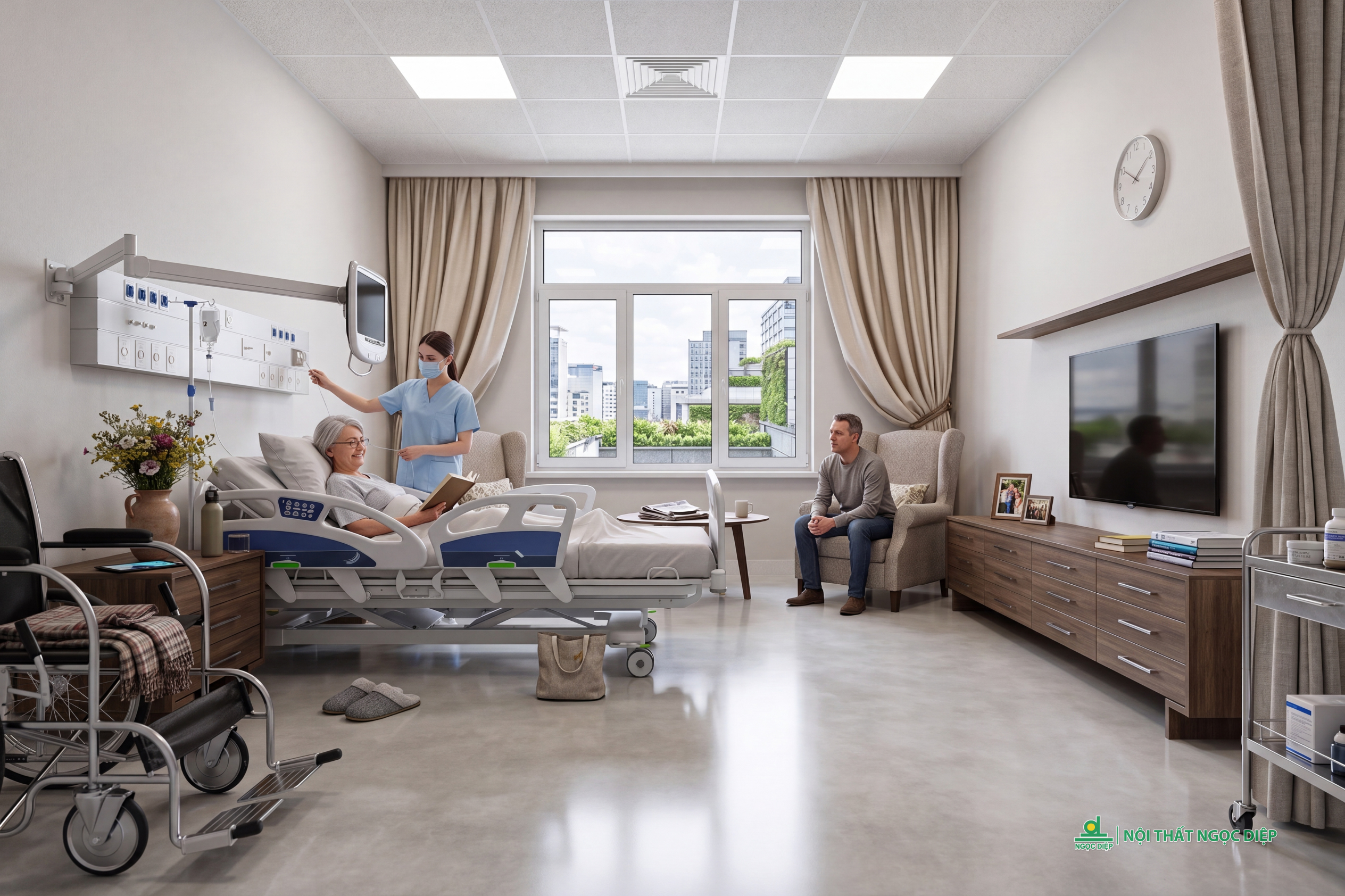
A healthcare interior space that fosters peace of mind must, first and foremost, be an environment of absolute technical safety. At Ngoc Diep Furniture, before transitioning from 3D blueprints to actual field deployment, every specialized product must surpass the medical sector’s most stringent testing standards.
100% of the furniture surfaces supplied by Ngoc Diep Furniture possess superior antibacterial properties and advanced anti-fouling capabilities, making daily hospital cleaning and sterilization effortless while maximizing resource cost efficiency.
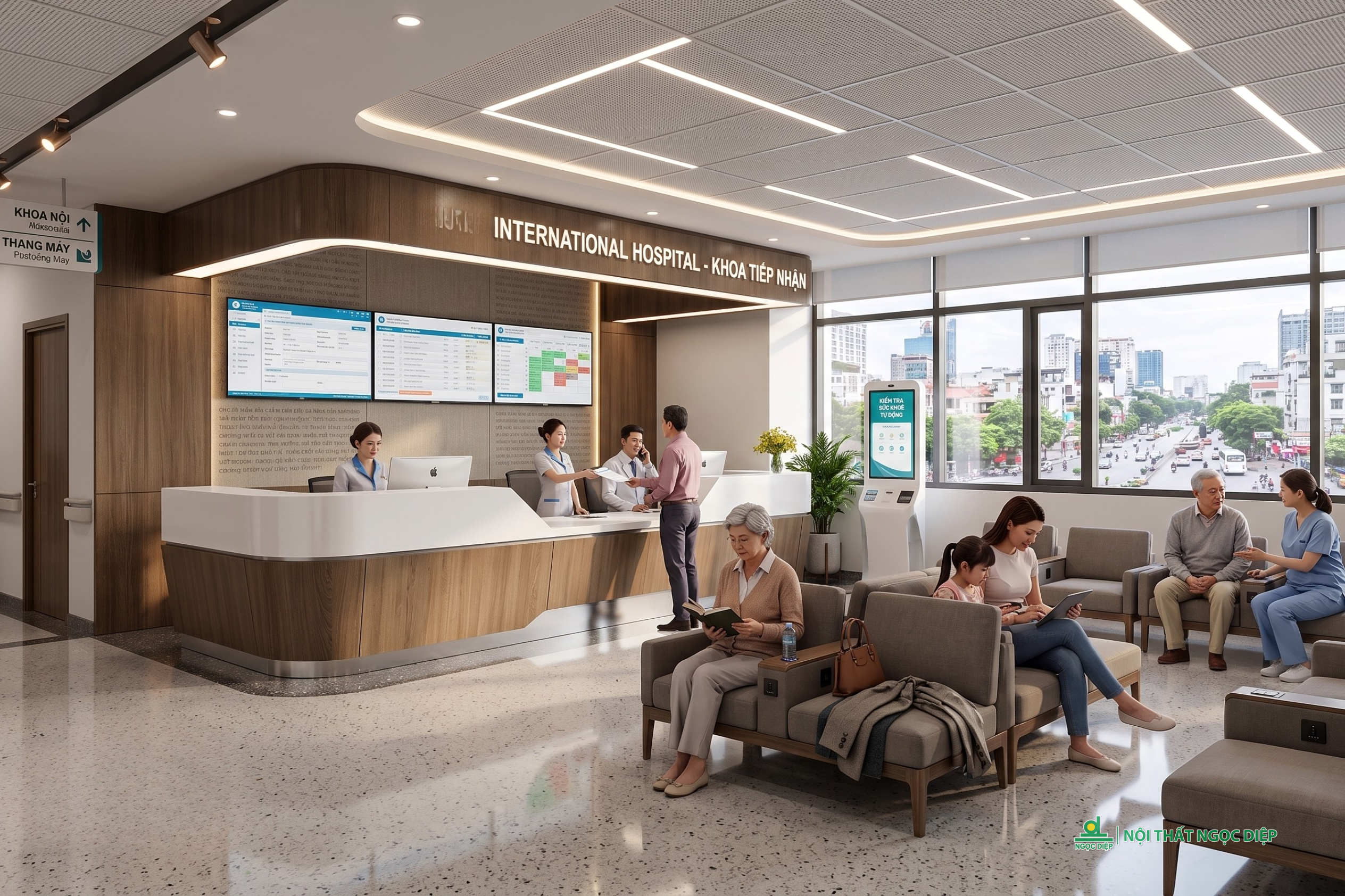
Today, Ngoc Diep Furniture stands as a trusted strategic partner, accompanying numerous major hospitals and healthcare facilities nationwide. Through an acute “custom-tailored” mindset and absolute dedication to every finishing detail, Ngoc Diep Furniture creates interactive healthcare environments—where spaces deeply comprehend the pressures of medical staff and accurately decode the needs of patients. This is not merely interior architecture; it is a sustainable commitment to a more fulfilling and scientifically optimized life.